
We Read Freakonomics Wrong, and So Did Everyone Else
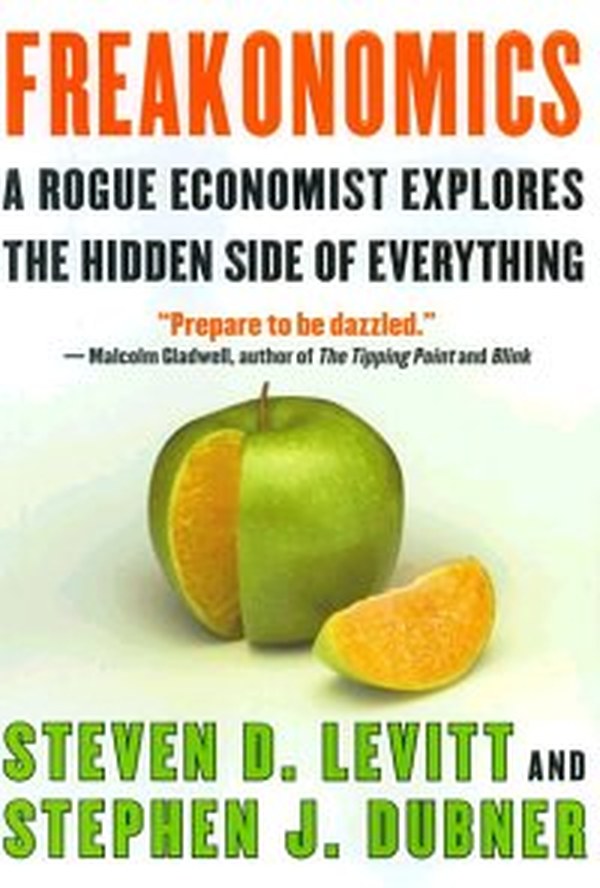
There is a particular kind of book that changes not what you know but how you think you are supposed to know things. Freakonomics was that book for a generation of students, mine included. It arrived with a promise that was genuinely thrilling the first time you encountered it: that underneath the boring surface of the world there was a hidden layer of incentives, and that a clever enough economist with a big enough dataset could reach in and pull out the truth. Sumo wrestlers throwing matches. Real estate agents quietly working against their own clients. A crime wave that fell because of a Supreme Court decision two decades earlier. Each chapter felt like being handed a key.
I want to be careful here, because it would be easy and lazy to write the version of this column that says the book was a fraud. It was not. Steven Levitt is a serious economist, and most of the criticism thrown at Freakonomics over the years has come from people who never read the underlying papers. The problem with the book is not that it lied. The problem is subtler, and I think more interesting, because it is a problem about what happens to an idea when you make it beautiful.
Take the most famous claim in the book, the one that legalised abortion in the 1970s drove down crime in the 1990s. The logic is clean. Fewer unwanted children means fewer children raised in the exact conditions that correlate with later crime, and so a generation later the crime rate falls. When you read it in the book, it lands as settled. It has the texture of a fact.
What the book doesn’t tell you (because telling you would spoil the effect) is that this claim was in an academic knife fight for the next two decades. In 2005, two economists at the Boston Fed, Christopher Foote and Christopher Goetz, found an actual coding error in the original paper, a set of statistical controls Levitt and his co-author thought they’d included and hadn’t. But when you corrected it and when you measured crime as a rate, not a raw total, the effect shriveled and, on some specifications, vanished. To his credit, Levitt admitted the mistake, and then published corrected work arguing the core finding survived anyway. His critics replied that it did not. That fight was never really settled. In fact, it is still unresolved.
Here is my actual argument. None of that uncertainty is in the book, and its absence is not an accident. It is the product. The entire appeal of Freakonomics is the feeling of certainty arriving where you expected confusion, and you can’t generate that feeling if you keep stopping to explain that your headline result is one contested reading of a noisy dataset that other smart people read differently. The hedging is what makes real economics honest, and the hedging is exactly what got cut.
I think this is bigger than one disputed chapter, because the book didn’t just make claims. It showed a method. And the method was the formula every chapter follows: find a surprising correlation, tell a vivid story about the incentive behind it, and tell the story with absolute confidence. That formula has proven to be a commercial bonanza, and the past two decades have seen it more or less replicated by every popular book on economics and the social sciences. Confidence, first. Uncertainty is optional. Now we have an entire genre predicated on the notion that the truth is counterintuitive, that experts are almost always missing it, and that the right clever insight can slice through years of complexity in a paragraph.
The uncomfortable part, for someone who loves economics and intends to study it, is that this genre is most people's only contact with the subject. The version of economics that sells books is the version that resolves cleanly, and the version practised in journals is a slow, uncertain, deeply hedged argument that almost never resolves at all. Freakonomics is where those two things came apart, and it came apart precisely because the book was so good at what it did.
That is the strange verdict I keep arriving at. The book was not too sloppy. It was too well made. It took ideas that should have carried a lifetime of caveats and it polished every one of them off, because the caveats were dull and the polished version sold four million copies. I still think it is worth reading. I just no longer think it is teaching what it appears to teach. It is teaching you how satisfying it feels to be certain, which is the one feeling a good economist is supposed to distrust most.
More Opinion
Other Columns
Jun 28, 2026
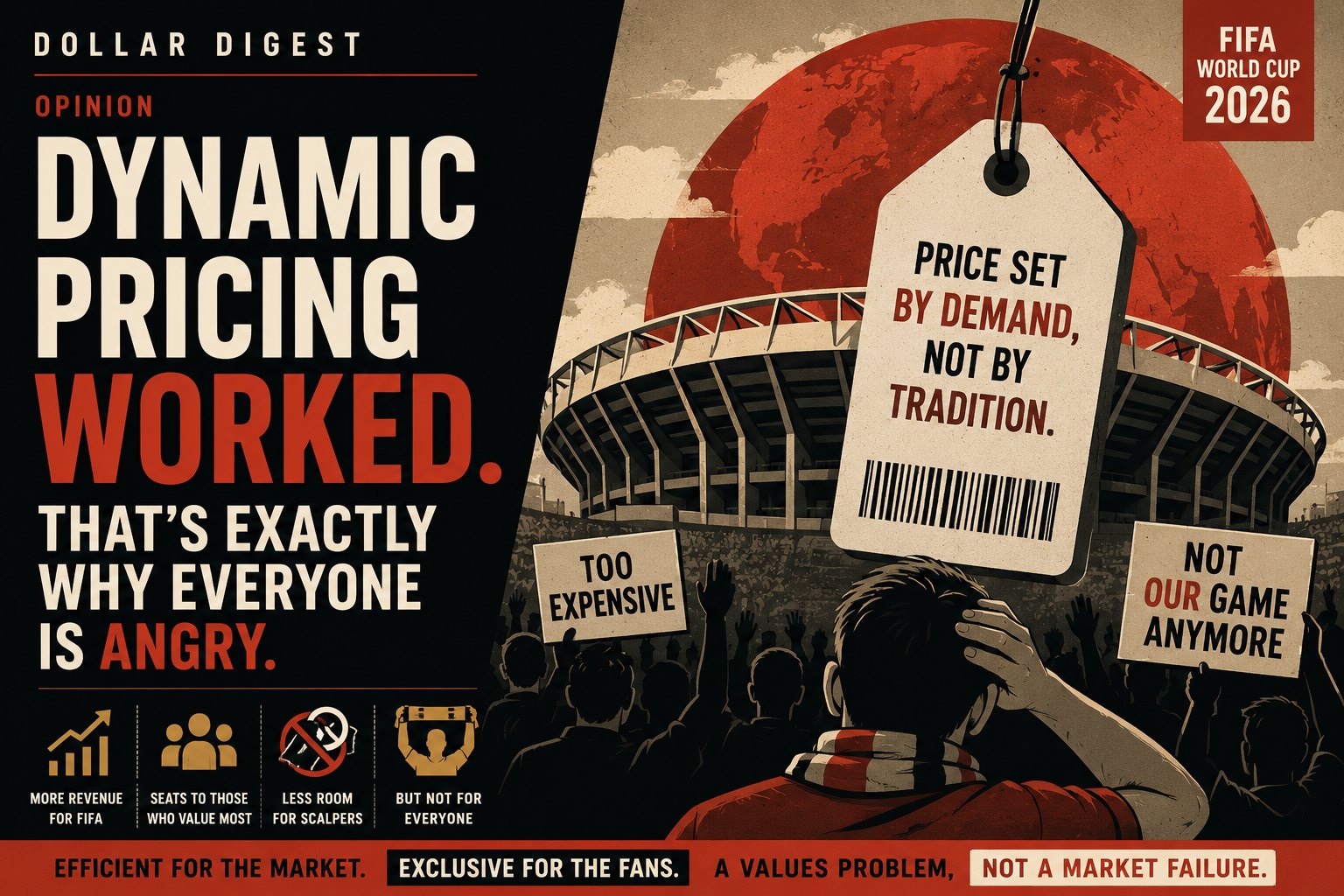
Dynamic Pricing Worked. That's Exactly Why Everyone Is Angry.
The 2026 World Cup sold out almost every seat in almost every stadium. FIFA called it a triumph. Fans called it a rip-off. Both are looking at the same number and reaching opposite conclusions, because they are arguing about two completely different things.

Jun 24, 2026
Chicago Did the Math. Everyone Else Threw a Party.
Sixteen cities looked at the same numbers and said yes. One looked at them and said no. Chicago walked away from the 2026 World Cup, and the economic record suggests it made the only intelligent decision in the entire tournament.
Jun 17, 2026
Margin Call Gets the Most Honest Line in Financial Cinema
Most financial crisis films are interested in the aftermath. The job losses, the foreclosures, the political fallout. Margin Call is interested in the eighteen hours before any of that happens, and that choice turns out to be far more revealing.
Jun 11, 2026
The Big Short Got the Villain Wrong
Most people come away from The Big Short with the same reading: Wall Street was greedy, regulators were asleep, and a handful of contrarians got rich by being the only ones willing to look at the data. That reading is not wrong. It is just not the film's most important argument.