Every November, something unusual happens to India's trade data. The merchandise trade deficit spikes. The rupee comes under pressure. And the cause, buried in the import numbers, is gold.
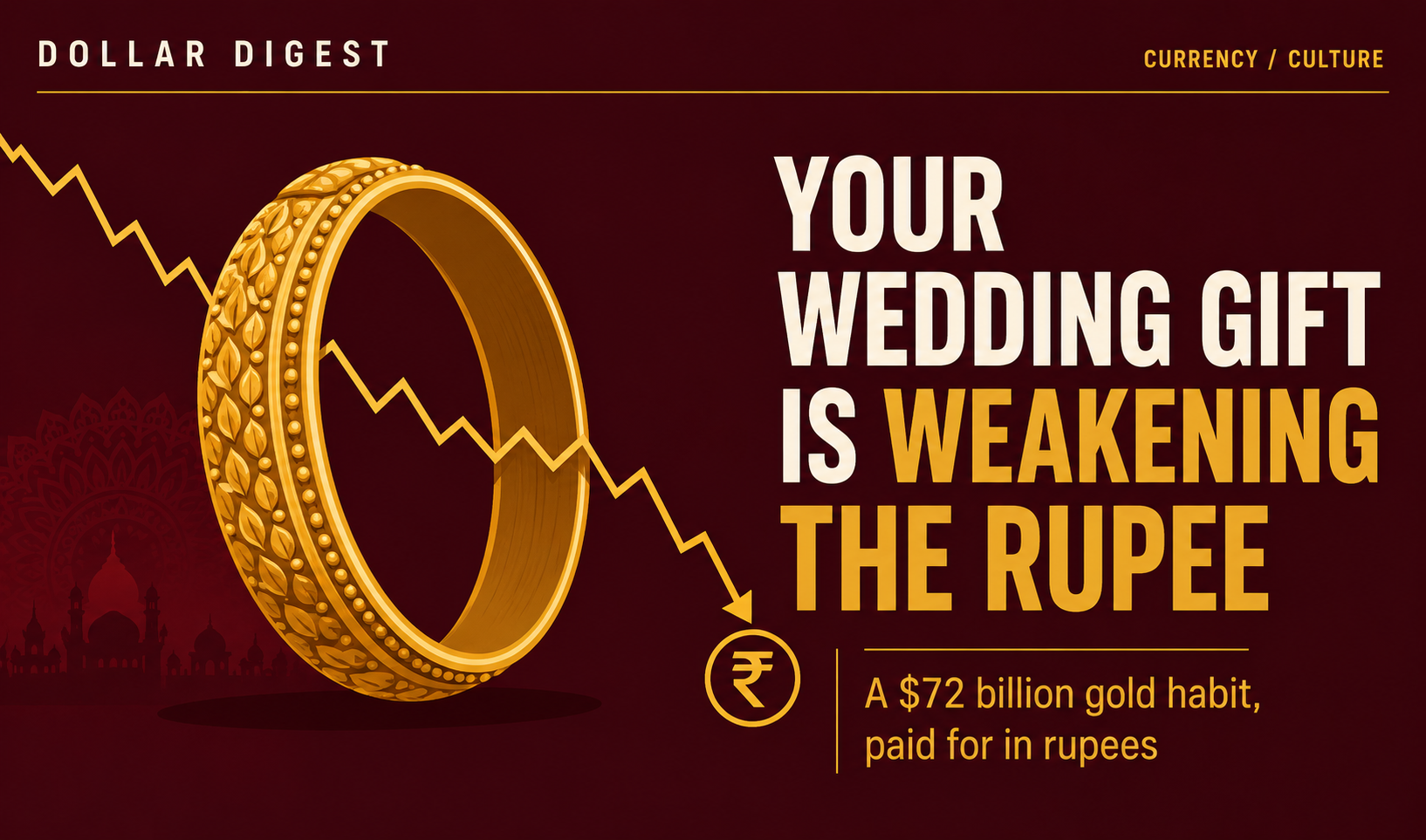
India's gold imports are invariably the second largest import item after Crude Oil in the country. The total bill in FY26 was nearly $72 billion, or around 9% of all that India spent on imports that year. These are oil-scale figures, and a large part of them move in direct response to the Hindu wedding calendar. In October 2025, gold imports alone were nearly three times the previous year, and that month alone was the biggest contributor to India's trade deficit ever. It was not a supply shock or policy change that caused the trigger. It was the wedding season.
Here is the part that most people miss. When Indian banks and importers buy gold from abroad, they pay for it in dollars. To get those dollars, they first have to sell rupees. That transaction shows up in India's external accounts as a foreign currency outflow, the same way an oil import does, or a machinery import does. A wider trade deficit pressures the rupee, which then forces the RBI to either let the currency weaken or spend its dollar reserves defending it. Neither option is free. The cultural meaning of the purchase is completely invisible to this process. Your grandmother's wedding gift and a barrel of crude oil look identical on a balance sheet.
There is a fair counterargument worth sitting with. Some economists, including Deepak Shenoy of Capitalmind, point out that gold is not really consumption. A family buying jewellery for a wedding is not burning money, they are storing savings in an asset that has held its value for centuries. Strip gold out of the equation and India's external accounts look considerably healthier. The real question is whether a purchase can be both a deeply cultural act and a financial decision at the same time. The answer is almost certainly yes, and that is precisely what makes gold so awkward to deal with at a policy level.
The government has been trying to manage it for over a decade, with mixed results. It hiked import duties on gold during a currency crisis in 2013, hiked them again in 2022, then cut them sharply in the 2024-25 budget to curb smuggling and support the jewellery industry. That back and forth is itself revealing. Policymakers have essentially been treating wedding purchases as a macroeconomic lever, pulling it in one direction and then the other depending on which problem feels more urgent that year.
The key lesson is simple. India's balance of payments does not know why a dollar left the country. It does not distinguish between fuel and festivity. When tens of billions of dollars flow out each year to buy gold, most of it timed around weddings and festivals, the pressure on the rupee and on India's external finances is real regardless of the sentiment behind the purchase. Understanding that link, between a tradition and a trade deficit, is what separates reading the news from actually understanding it.