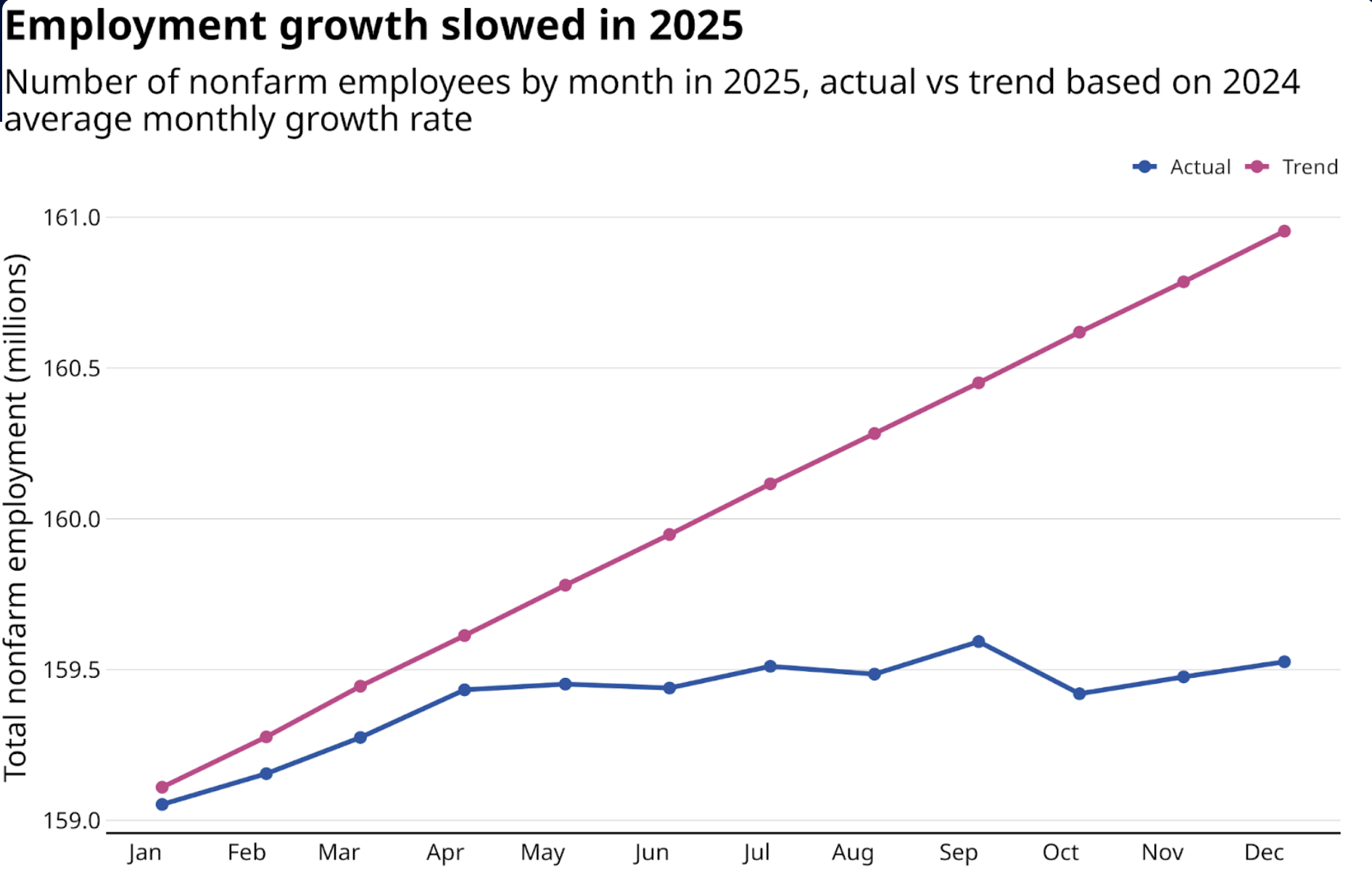
The latest US jobs report showed hiring slowing down. The immediate reaction in financial markets was positive, which seems counterintuitive at first. Fewer jobs created should signal weakness. So why did markets rise?
The answer lies in understanding what the jobs data signals in the current economic context, and what policymakers are watching for.
The Soft Landing Thesis
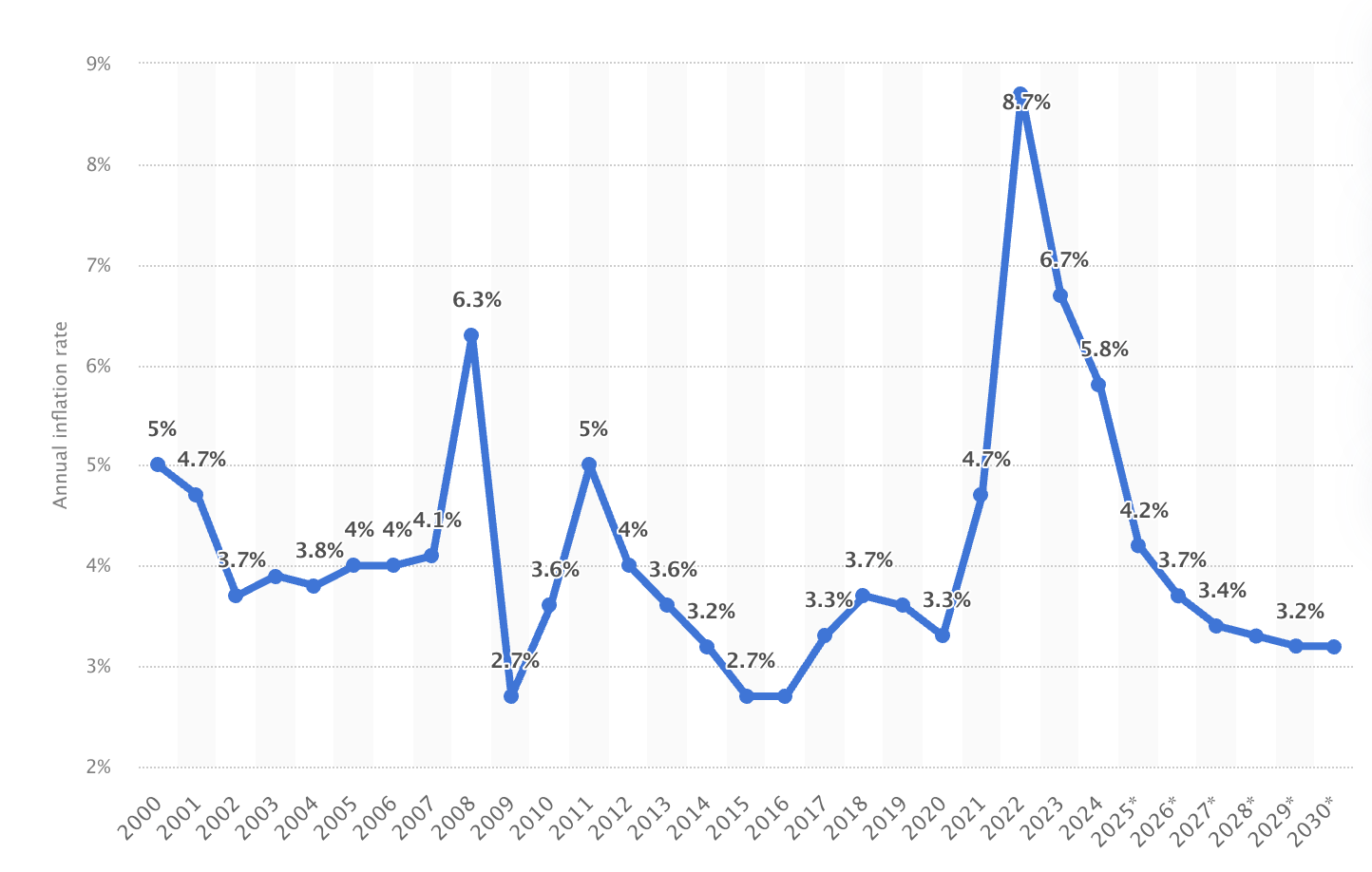
For the past two years, the Federal Reserve has been raising interest rates to bring inflation down. The risk with aggressive rate hikes is that they slow the economy too much, leading to a recession. The ideal outcome, a soft landing, involves inflation falling while employment remains broadly stable and growth continues at a moderate pace.
Slowing job growth can reflect economic balance rather than weakness. Demand is easing, but not collapsing. When hiring cools without collapsing entirely, it suggests that rate hikes are working as intended without causing serious economic damage. Markets interpreted the latest data in exactly this way.
What This Means for Interest Rates
Moderating job growth reduces pressure on wages, which in turn reduces one of the persistent drivers of services inflation. If wage growth slows, service sector prices are more likely to ease, giving the Federal Reserve greater flexibility to consider cutting rates. Markets priced in a higher probability of rate cuts following the report, which supported equity valuations.
The Limits of This Interpretation
It is important not to read too much into one data point. A single month of slower hiring does not confirm a soft landing. The Federal Reserve will want to see sustained evidence of cooling inflation alongside resilient employment before changing course. The data needs to remain consistent over several months before policy shifts.
What is notable about this moment is the psychological shift it reflects. After years of economic volatility, markets now welcome moderation over extremes. Slower growth is no longer automatically bad news when it comes alongside falling inflation. The context has changed how the same data is interpreted.
In the current environment, moderating job growth can indicate healthier economic stability rather than trouble ahead, particularly when it accompanies declining inflation.