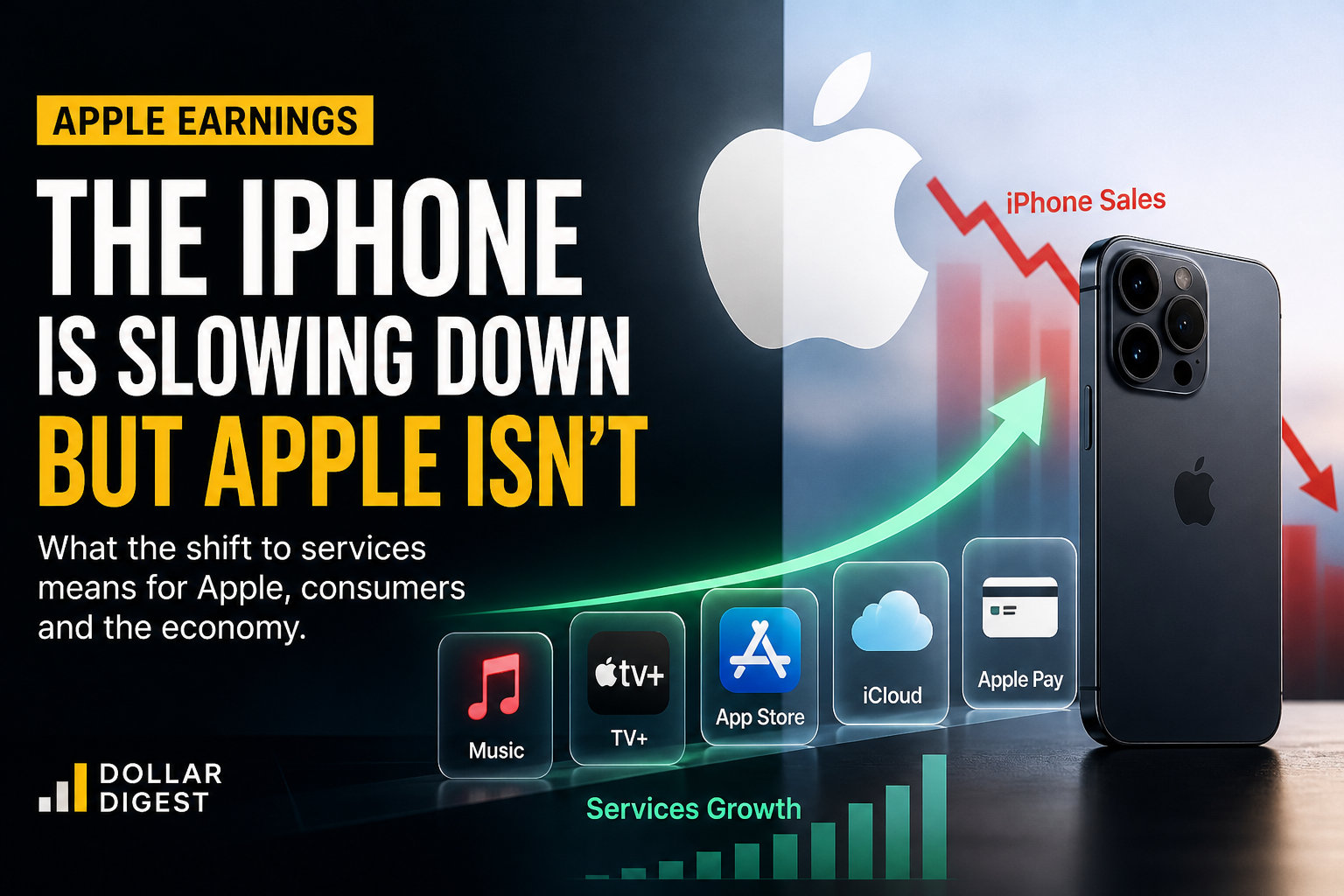
Apple just reported its latest earnings, and at first glance, the story looks familiar. iPhone sales are no longer growing the way they once did. In some markets, demand has slowed, and upgrades are becoming less frequent. For a company built around one of the most successful consumer products ever, that could have been a problem.
But it wasn't.
What stood out this time was not the slowdown in iPhones, but the strength of everything around it. Apple's services business, which includes subscriptions, payments, and digital platforms, continued to grow steadily. This helped offset weaker hardware performance and kept overall revenues stable.
This shift matters because it reflects a broader change in how consumers spend. Big purchases like smartphones are becoming less frequent. Devices are lasting longer, and consumers are more cautious about upgrading. At the same time, spending on digital services is increasing. Subscriptions, apps, and recurring payments are becoming a larger part of everyday consumption.
Apple is not alone in this transition. Many large companies are seeing similar patterns. Demand for physical goods has cooled after years of strong growth, while services continue to expand. This creates a split in the economy where some sectors slow down while others remain resilient.
There is also a strategic advantage in this shift. Services provide more stable and predictable revenue compared to product sales, which can fluctuate with demand cycles. By growing its services segment, Apple is reducing its reliance on a single product and building a more balanced business model.
From a macroeconomic perspective, this tells us something important. Consumer demand is not disappearing, it is evolving. Spending is becoming more continuous and less tied to one-time purchases. This can make parts of the economy more stable, but it also means growth will look different than before.
What makes this development interesting is how subtle the shift is. There is no dramatic collapse in demand, no sudden disruption. Instead, it is a gradual change in behaviour. Consumers are holding onto products longer while quietly increasing spending elsewhere. Companies that recognise this early and adapt their models will likely perform better. Those that rely too heavily on traditional product cycles may find growth harder to sustain.
In simple terms, Apple's earnings are not just about one company. They are a snapshot of how consumption itself is changing.
Consumer spending is shifting from one-time product purchases to ongoing services, and companies that adapt to this transition are better positioned for stable long-term growth.