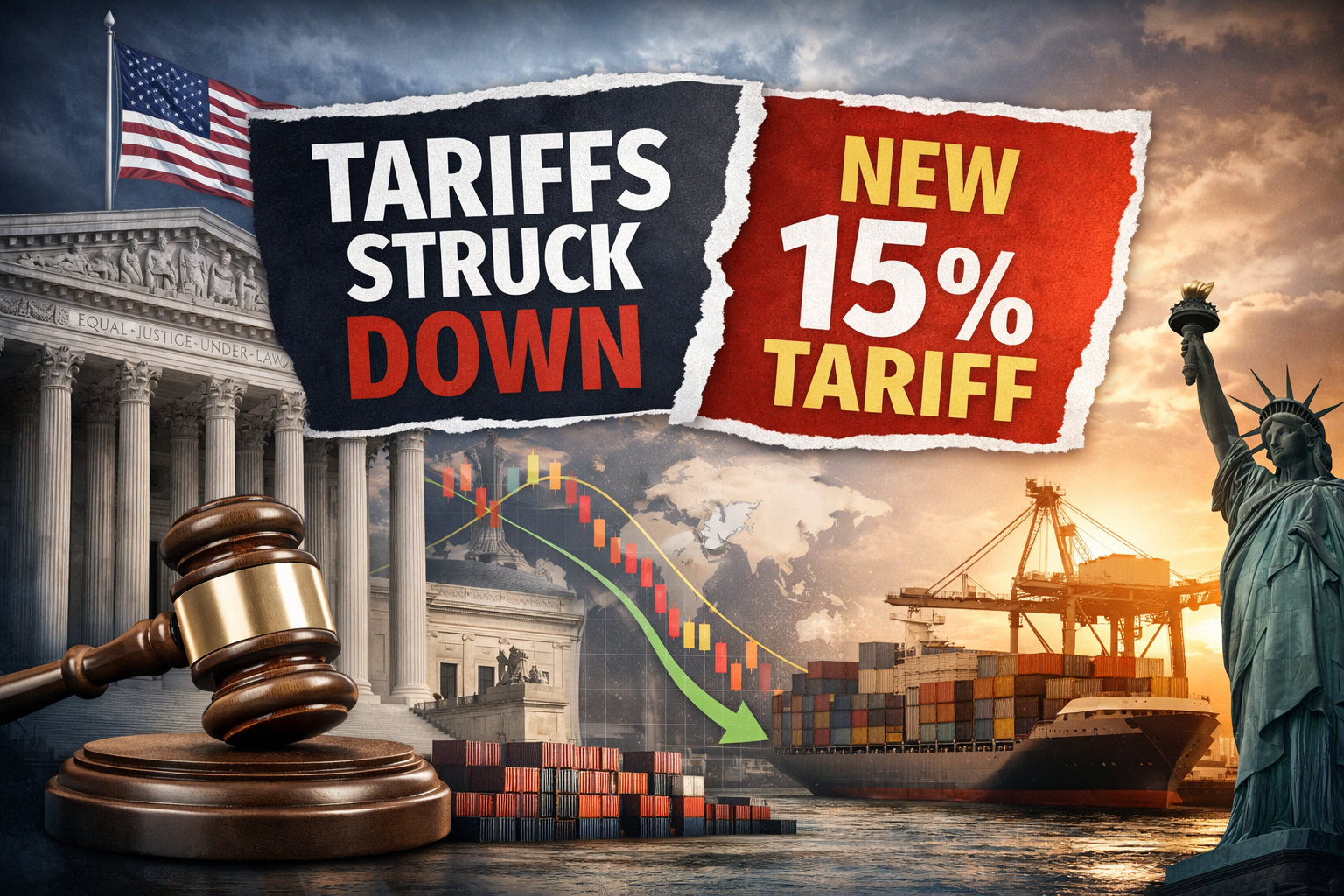
A Supreme Court decision on February 20 invalidated most of the broad global tariffs that had been in place, creating significant uncertainty across trade-dependent industries. The ruling highlighted a fundamental tension in how trade policy is made in the United States, and what it means for businesses trying to plan in an unpredictable environment.
What the Court Decided
The Supreme Court ruled that the executive branch had exceeded its authority in imposing sweeping tariffs without adequate legislative backing. The decision drew on longstanding constitutional principles about the separation of powers between Congress and the presidency. While some targeted tariffs based on national security grounds survived the ruling, the broad, globally applied levies were struck down.
Why This Creates Uncertainty Rather Than Clarity
The ruling does not end the tariff debate. It shifts the arena. Congress now faces pressure to either codify some form of tariff authority or allow the court's decision to stand. Political dynamics make a quick legislative response unlikely, which means businesses face a period of uncertainty about what trade costs will look like going forward.
The Economic Impact
Tariffs function as a tax on imports. When broad tariffs are in place, domestic producers of competing goods benefit from reduced foreign competition, but consumers and businesses that rely on imported inputs face higher costs. The removal of these tariffs lowers prices for importers but removes protection for some domestic industries, creating a genuine distributional debate about who benefits and who loses.
The Broader Signal
This episode illustrates how trade policy has become increasingly contested terrain in the United States. The rules governing international commerce are no longer stable in the way they once appeared to be. Companies with global supply chains must now treat trade policy risk as a core operational variable, not just a background condition.
Trade policy risk has become a core operational variable for businesses with global supply chains, not just a background condition.