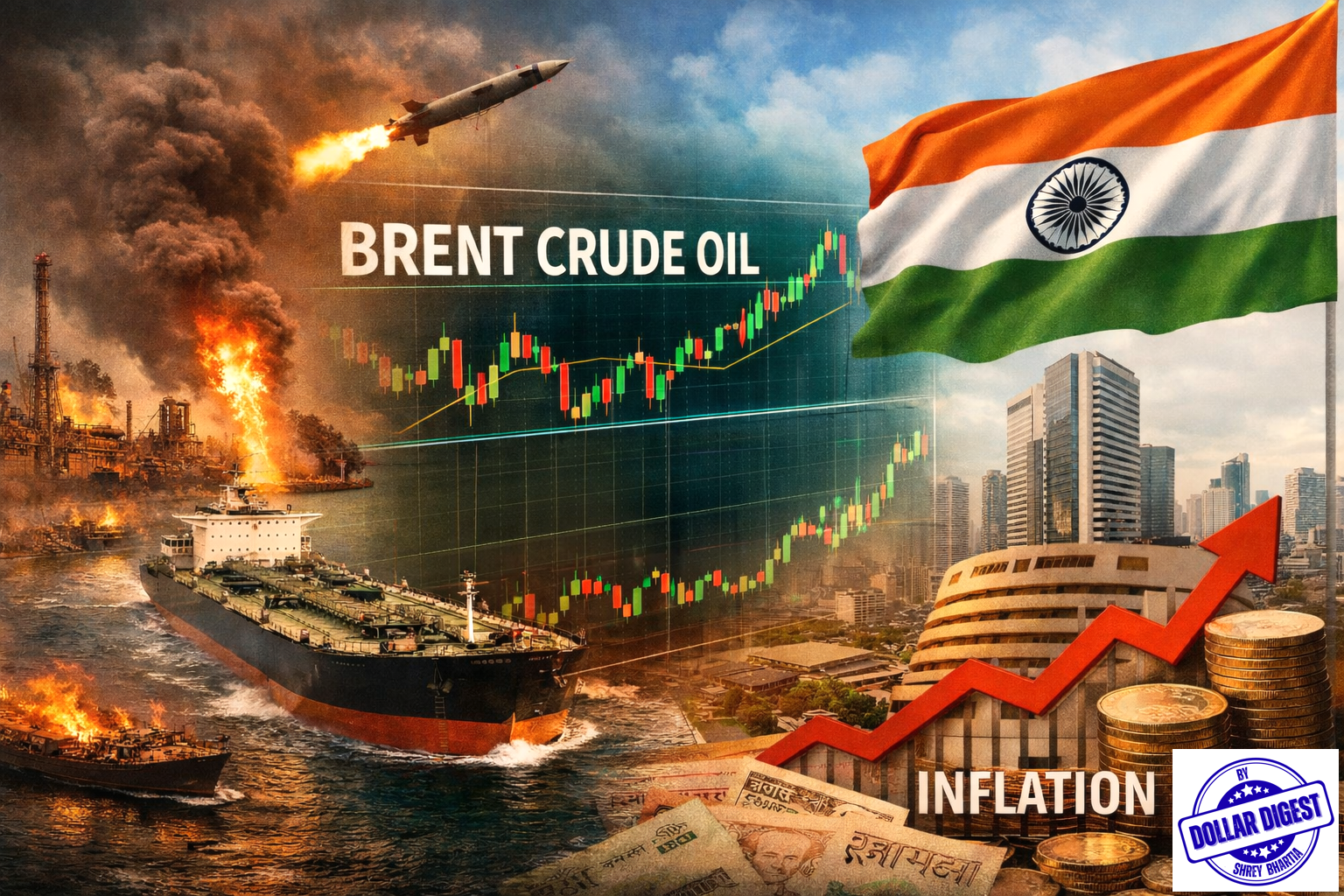
The conflict between Iran and Israel might feel geographically distant from India, but its economic consequences are immediate and measurable. India's deep reliance on Middle Eastern energy and trade routes means that instability in this region translates directly into domestic economic pressure.
Oil Price Pressures
The cost of Brent crude has risen as risks to the Strait of Hormuz increase. India imports over 80% of its oil, making it one of the most exposed large economies to Middle Eastern supply disruptions. Higher oil prices affect India's balance of payments, widen the trade deficit, and put downward pressure on the rupee. They also feed directly into domestic inflation through fuel, transportation, and manufacturing costs.
The Reserve Bank Faces a Difficult Balance
The Reserve Bank of India must balance economic growth against inflation. If oil prices rise significantly, inflationary pressure may force the RBI to maintain tighter monetary policy for longer than the growth outlook would otherwise warrant. This limits the central bank's flexibility at a time when rate cuts could provide useful support to the economy.
Shipping and Trade Disruptions
Elevated insurance and freight rates make shipping more expensive. Indian exporters of chemicals, engineering goods, and textiles face higher costs and potential delays. This hits a sector of the economy that is already trying to expand its global footprint and compete on price.
Remittances at Risk
Millions of Indian workers are employed in Gulf states. Remittances from these workers represent a meaningful source of foreign exchange for India. Any serious escalation that disrupts economic activity in the Gulf would reduce these flows, weakening one of India's stable sources of dollar inflows.
Financial Market Sensitivity
During geopolitical crises, capital tends to flow toward safe-haven assets, away from emerging markets. India's stock market, particularly sectors sensitive to oil such as aviation and consumer goods, faces increased volatility. Foreign portfolio investors may reduce exposure, adding pressure to equity markets and the currency.
Energy diversification and macroeconomic resilience are essential safeguards for managing external shocks of this kind.