
Airline earnings over the past week have offered an interesting signal about the state of the global economy. At a time when growth appears uneven and several sectors are slowing, airlines are reporting strong profits. This has been driven by continued travel demand and the ability to maintain higher ticket prices. The strength of this sector stands out because it contrasts with the weakness seen in areas like manufacturing and goods consumption.

A key reason behind this performance is that demand for travel has remained strong even as prices have increased. Airlines have raised fares due to higher fuel costs and operational expenses, yet consumers continue to book flights at high levels. This suggests that demand for travel is currently less sensitive to price increases. One explanation lies in changing consumer behaviour. Spending has shifted in recent years, with more people choosing to spend on experiences such as travel rather than on physical goods.
This shift highlights a broader pattern in the economy. Demand for goods has weakened, particularly after the surge seen in previous years. At the same time, services such as travel, hospitality, and entertainment continue to perform well. This divergence helps explain why the overall economic picture feels mixed. Some sectors are clearly slowing, while others remain resilient and continue to grow.
Another important factor supporting airline profits is pricing power. In many industries, companies are finding it difficult to pass higher costs on to consumers. Airlines, however, have managed to do so without significantly reducing demand. This is partly due to supply constraints. Airlines cannot quickly expand capacity because of limits related to aircraft availability, staffing, and operational logistics. With supply relatively tight and demand strong, higher prices can be sustained.
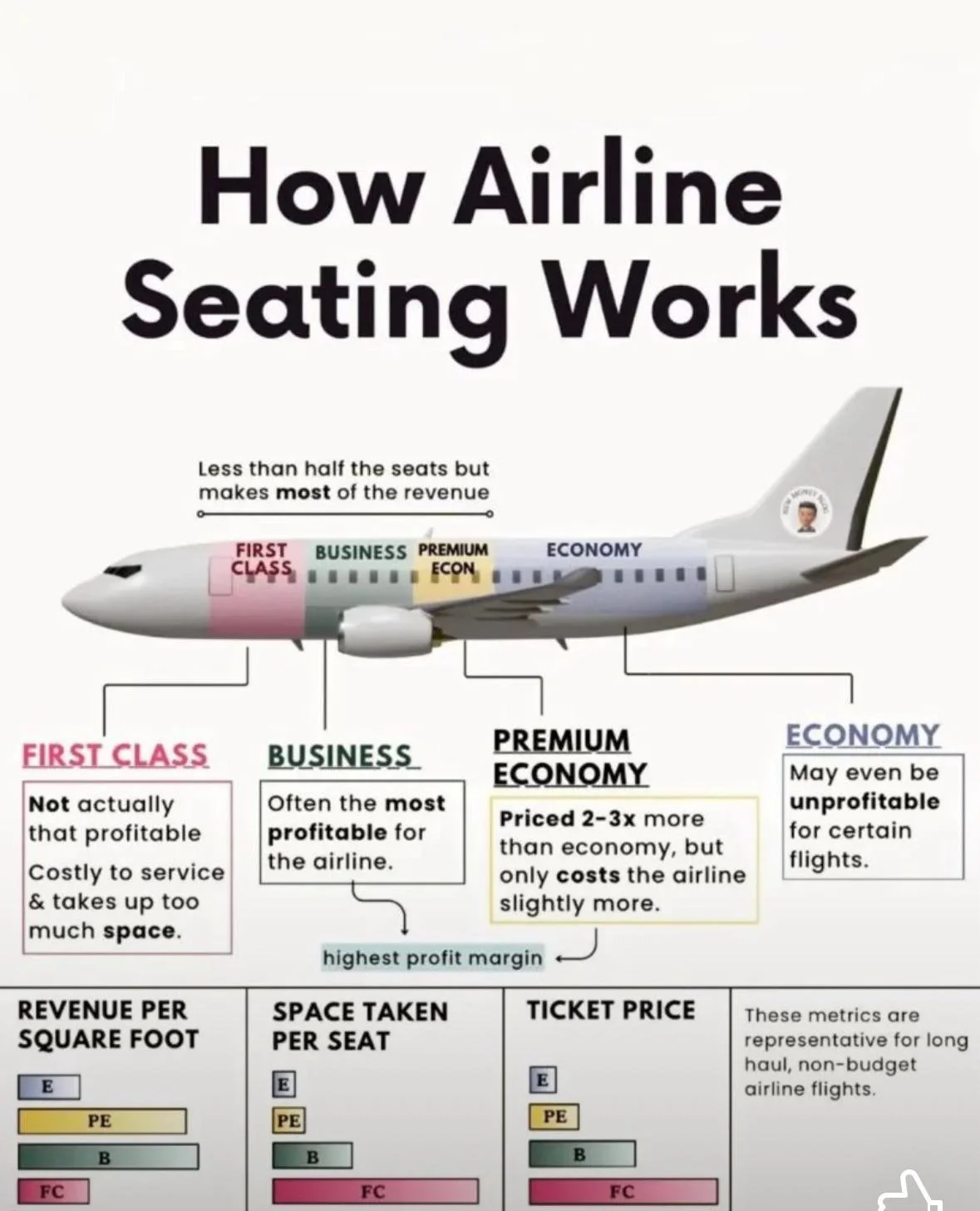
The strength in airline pricing also has implications for inflation. Services such as air travel contribute to what is often referred to as services inflation. Unlike goods prices, which have begun to stabilise, services prices tend to remain elevated for longer periods. As long as demand stays strong and companies retain pricing power, these price pressures can continue. This can slow the overall pace at which inflation declines.
Taken together, the performance of airlines reflects a broader trend in the global economy. Consumer spending has not disappeared, but it has shifted. Rather than being evenly distributed, it is concentrated in specific sectors, particularly services. This creates an environment where some parts of the economy remain strong while others face pressure. Airline profits are a clear example of how this uneven pattern is playing out in real time.
Consumer demand is not weakening uniformly, it is shifting toward services, enabling pricing resilience that may perpetuate sector-specific inflationary pressures.