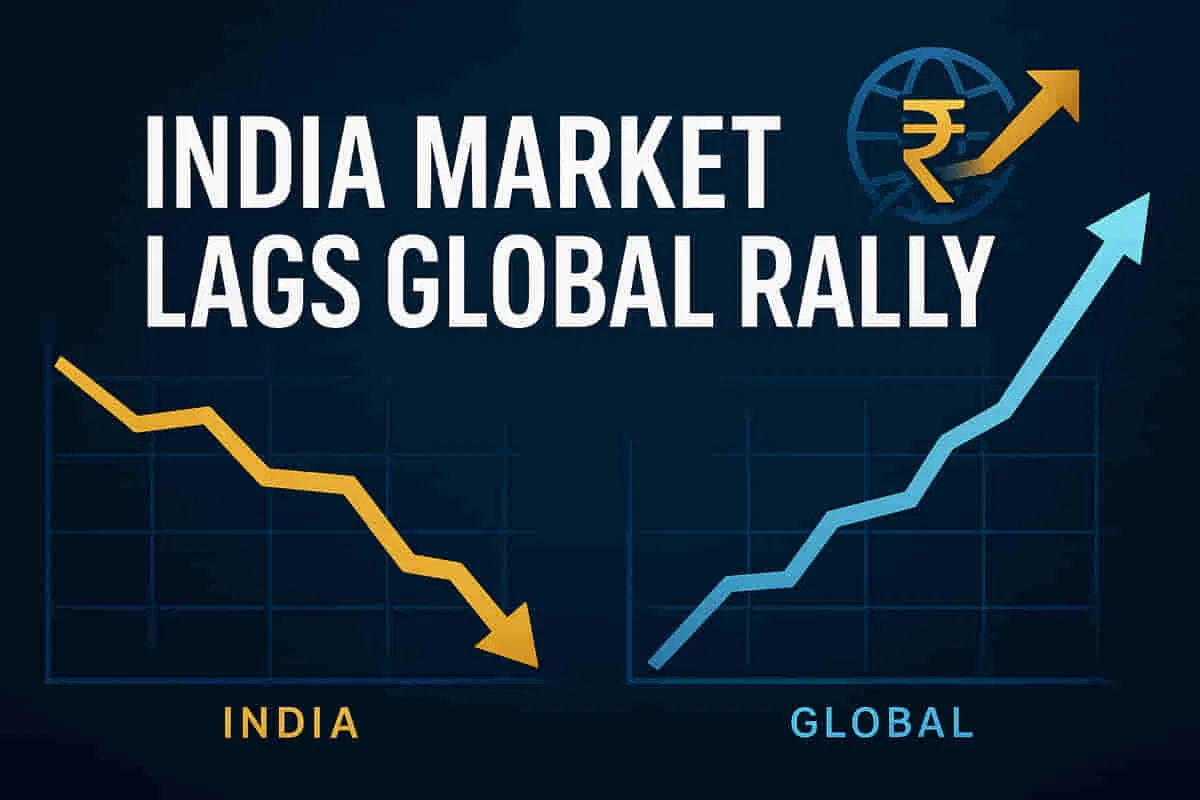
While US and European markets climbed strongly on the back of positive economic data, Indian equity markets moved in the opposite direction. The Nifty and Sensex underperformed significantly compared to their global peers during this period. Understanding why requires looking at factors specific to India rather than global conditions.
Foreign Institutional Investor Outflows
One of the primary drivers of Indian market weakness has been the sustained selling by foreign institutional investors. As US interest rates remained elevated, dollar-denominated assets offered attractive returns with lower perceived risk. This made it rational for global investors to reduce exposure to emerging markets, including India, in favour of safer or higher-yielding alternatives. The resulting capital outflows put downward pressure on both equity prices and the Indian rupee.
Valuation Concerns
Indian markets entered this period trading at relatively high valuations compared to historical averages and global peers. When sentiment shifts, expensive markets tend to correct more sharply. Investors who had been willing to pay a premium for India's growth story became more cautious as earnings growth showed signs of moderating in some sectors.
Domestic Earnings Pressures
Quarterly earnings results from several large Indian companies came in below expectations. Margin pressures, input cost challenges, and slower urban consumption growth contributed to disappointments in consumer, financial, and industrial sectors. This created a local narrative that reinforced the more cautious global view on Indian equities.
Currency Weakness
The rupee's depreciation added another layer of concern. A weaker currency increases the cost of imports, adds to inflationary pressure, and reduces the real returns for foreign investors when measured in dollars. This created a feedback loop where currency weakness and equity outflows reinforced each other.
Indian markets face a combination of high valuations, FII outflows, and earnings pressures that explain their underperformance even as global markets rallied.