
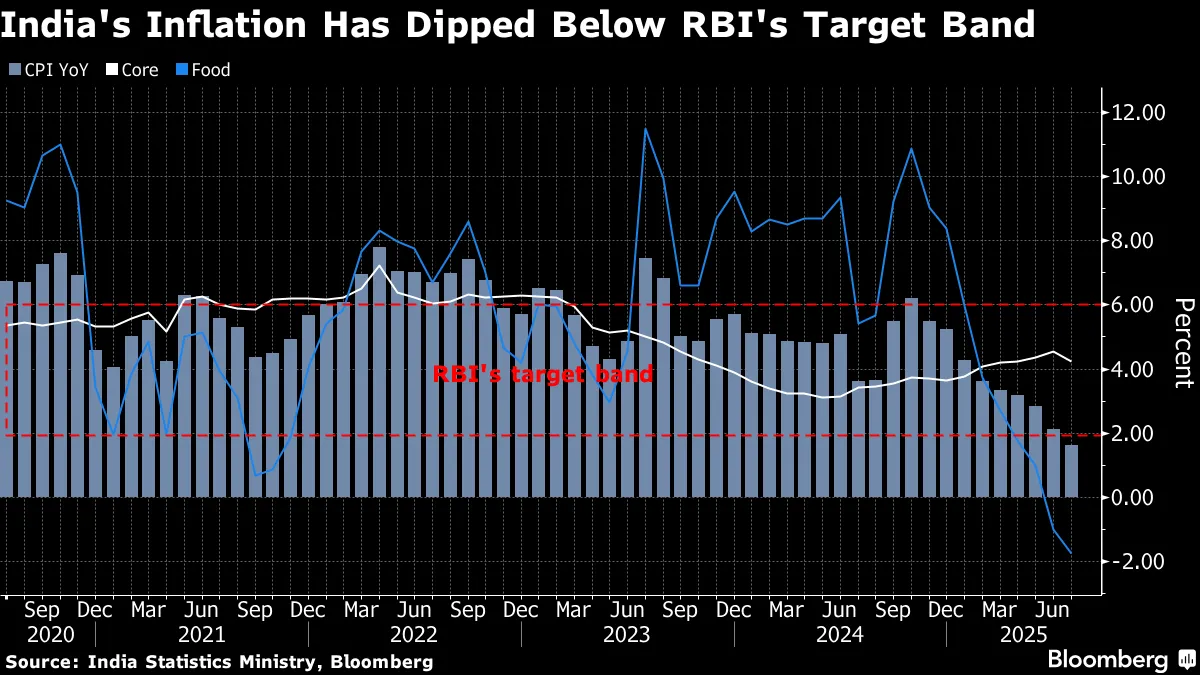
The Reserve Bank of India's inflation targeting framework is coming up for review in March 2025. Despite some debate about whether the 4% target remains appropriate, the expectation is that it will be retained broadly unchanged. Understanding why reveals something important about how central banks think about credibility and long-term price stability.
What the Framework Does
India formally adopted inflation targeting in 2016. The framework gives the Reserve Bank of India a mandate to keep consumer price inflation at 4%, with a tolerance band of 2% on either side. This means inflation between 2% and 6% is acceptable, but the central target is 4%. The RBI's primary tool for achieving this is the policy interest rate.
Why It Has Worked
Over the past decade, India's inflation outcomes have improved compared to the period before the framework was adopted. Inflation expectations have become better anchored. When businesses and households believe that the central bank will act to keep prices stable, they are less likely to build large inflation expectations into wages and contracts. This makes the actual job of controlling inflation easier over time.
The Case for Keeping It
Changing an established inflation target carries real risks. If the target were raised, it could signal to markets that the central bank is willing to tolerate higher inflation in pursuit of other goals such as faster growth. This could unsettle expectations and make future inflation control harder and more costly. The credibility built over a decade would be damaged.
The Trade-Off
Critics argue that a 4% target keeps monetary policy tighter than necessary, potentially constraining growth. But policymakers counter that stable and predictable inflation creates a more reliable environment for investment and consumption than short-term stimulus from looser policy. In the long run, credibility in monetary policy is itself a form of economic asset.
Credibility in monetary policy is itself a form of economic asset, and maintaining a consistent inflation target preserves the trust that makes central bank guidance effective.