
The updated growth forecast for India coincides with simultaneous strengthening across multiple economic sectors. The Reserve Bank of India elevated its projection to 7.3 percent for the upcoming fiscal year, driven largely by 8.2 percent GDP growth recorded in Q2. This performance showed that manufacturing, services, and agriculture all contributed meaningfully rather than relying on a single sector, signaling a transition from recovery to stable expansion.
Rising real incomes boosted household purchasing power while inflation remained below expectations. The RBI reduced interest rates, lowering borrowing costs for consumers and businesses alike. This alignment of stronger output paired with moderating price pressures underpins the revision's confidence.
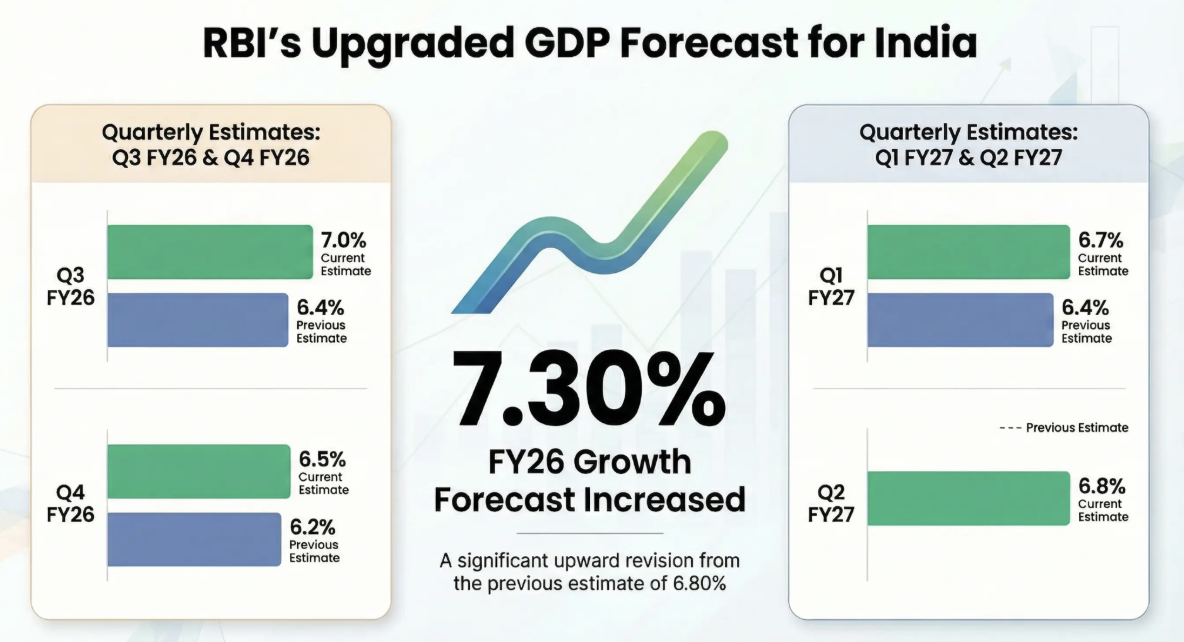
What the Revised Forecast Means
The implications are substantial. Businesses can anticipate larger domestic markets, potentially spurring hiring and investment. Lower credit costs enable household purchases and entrepreneurship. Enhanced GDP growth increases government revenue for development spending.
Success depends on maintaining domestic demand stability and favorable global conditions. If external headwinds intensify, India's export sectors could face pressure that offsets domestic gains.
A Unique Alignment
What makes this moment notable is the convergence of factors that rarely occur together. Growth is high, inflation is moderating, and monetary policy is becoming more accommodative. This alignment of India's economic indicators, where growth, inflation, and monetary policy move favorably in the same direction, sustains India's position among the world's fastest-growing major economies and provides a durable foundation for the next phase of development.
A 7.3 percent forecast enables expanded business planning, cheaper household borrowing, and expanded fiscal capacity for government development initiatives.