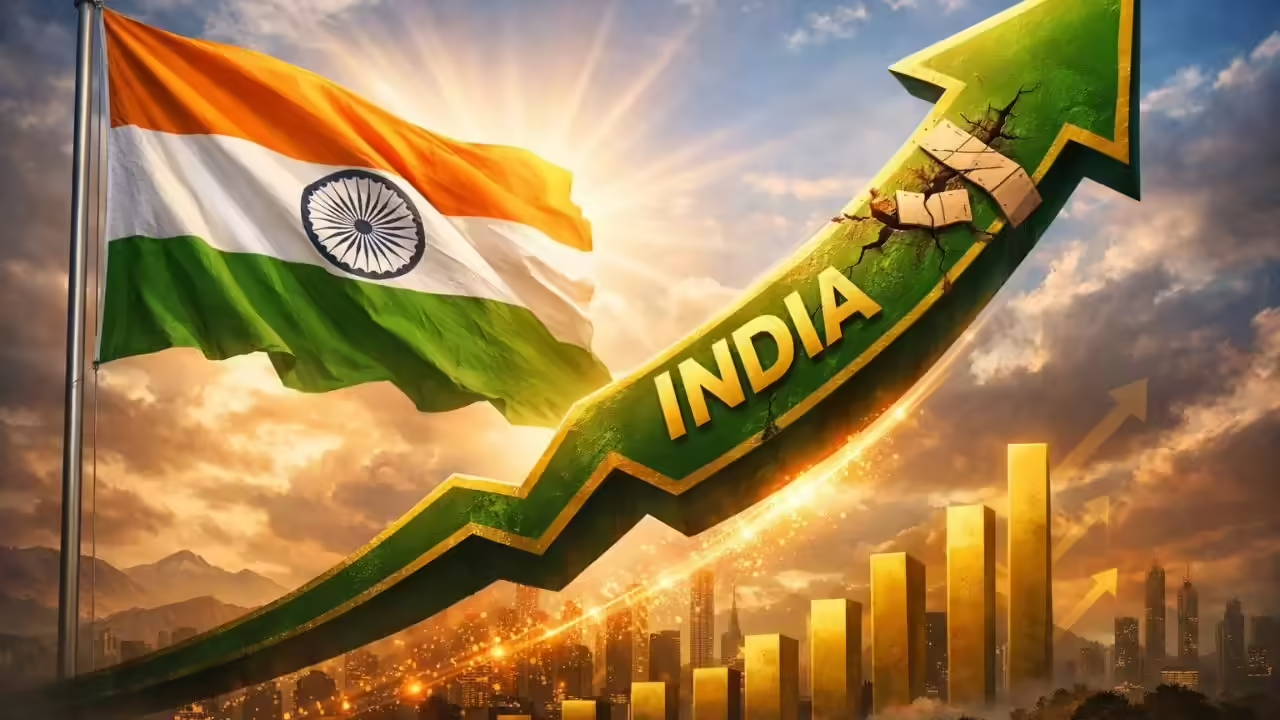
India ends 2025 in what the government calls a Goldilocks economic phase. Growth remained strong and inflation came down at the same time. For policymakers, this is the best possible outcome. The real question is whether this balance can continue into 2026 or whether it was supported by temporary factors.
Economic growth in 2025 was driven mainly by government capital expenditure and the services sector. Large infrastructure spending helped support demand across construction, manufacturing, and logistics. Services such as IT, finance, and professional services continued to expand and remained the biggest contributors to growth. This kept overall GDP growth high even as global conditions weakened.
Inflation eased during the year, which allowed the Reserve Bank of India to hold interest rates steady. Food inflation slowed down compared to previous years, and earlier interest rate hikes began to reduce price pressures across the economy. However, inflation did not disappear. Inflation decelerated but remained above the RBI's target range. As a result, monetary policy will stay restrictive, with no shift toward an expansionary state.
The global economy did not share India's stability. Growth in the United States and Europe slowed, while inflation remained higher than central banks would like. Because of this, global interest rates stayed high for longer. Central banks avoided early rate cuts to prevent inflation from rising again. This kept global financial conditions tight throughout 2025.
India benefited from stronger domestic demand, but it is still affected by global trends. World trade growth remained weak, and exports faced pressure from slower demand in key markets. If global growth slows further in 2026, India's export sectors will feel the impact, especially engineering goods, chemicals, and IT services linked to global corporate spending.
Capital flows are another risk. High interest rates in advanced economies reduce the flow of money into emerging markets. If rate cuts are delayed further in 2026, foreign investment could become more volatile. While India's external position is stronger than in the past, it is not immune to global liquidity shifts.
India enters 2026 with strong momentum, but the margin for error is small. Growth depends on continued government spending, stable inflation, and supportive global conditions. The Goldilocks outcome of 2025 was real, but whether it lasts will depend on how these factors hold up in the year ahead.
Sustaining growth without an expansionary monetary policy requires conditions to remain tightly aligned to avoid future economic challenges.