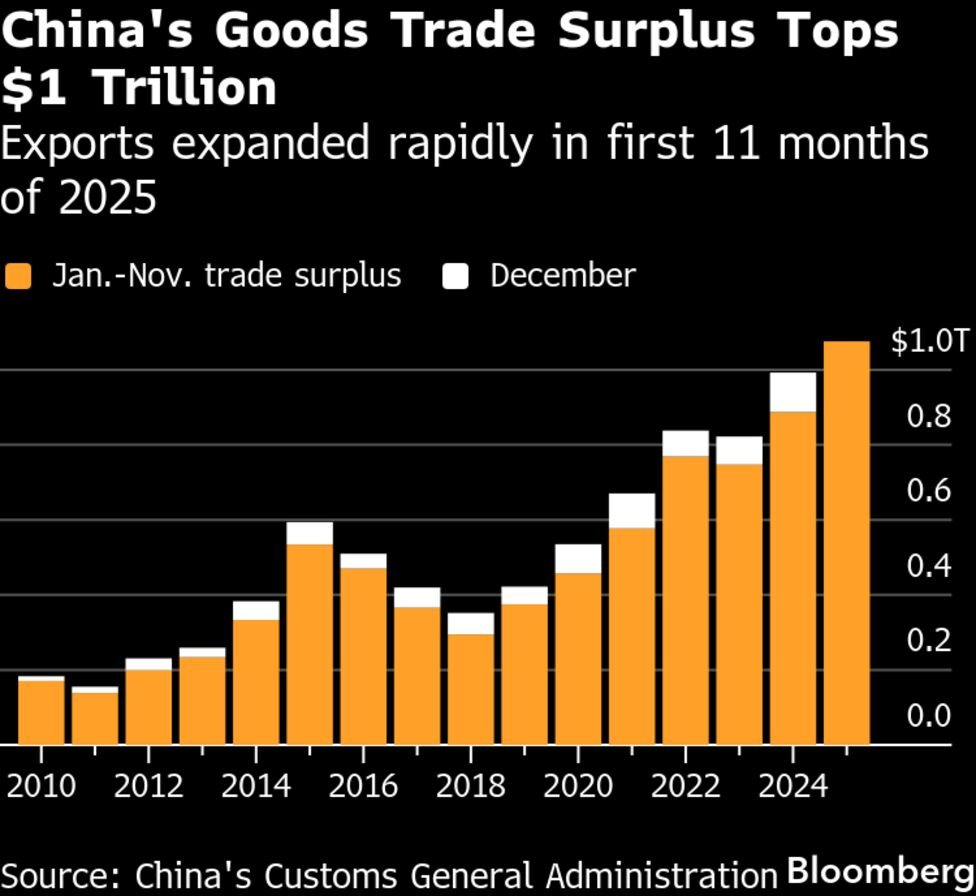
With a trade surplus of nearly $1 trillion at the end of the year, China is gaining attention for its imbalance rather than its strength. While domestic demand continues to lag, exports continue to be robust due to scale, state support, and a weak currency. As a result, the economy produces far more than it consumes, driving surplus goods into international markets at a time when many nations are already dealing with slow growth and political pressure to defend domestic businesses.
This surplus is more than just a trade figure. It is a reflection of more serious problems with China's economy. Due to low confidence, declining property values, and a lack of social safety nets, household spending is still cautious. Due to decreased profits and insecurity about future demand, businesses are investing less domestically. China is depending on overseas markets to keep factories operating rather than absorbing output domestically, which increases the difference between what it sells and what it purchases from the rest of the world.
It is getting more difficult for trading partners to overlook the impact. Although cheap Chinese exports keep consumer prices low, they also put pressure on domestic producers who are unable to compete on scale or cost. Calls for tariffs, subsidies, and more stringent trade regulations in the US and Europe are already indicative of this tension. What appeared to be an interim imbalance following the pandemic now feels more structural, raising the possibility of protracted trade conflicts and a more fragmented global economy.
In this tale, currency has a subtle but significant role. A depreciating yuan increases the competitiveness of Chinese goods overseas while hindering imports, which strengthens the surplus. Additionally, it places the choice of government expenditure on other nations, making them decide whether to accept trade deficits or respond with legislative actions that might further impede international trade.
In the long run, the excess poses a problem for both China and the rest of the world. Global tension would be lessened if domestic spending were to rebalance, but this would require political will and time-consuming reforms. Without that shift, China's trade strength may increasingly be seen as a source of instability rather than confidence, reshaping how governments, companies, and investors respond to its role in the global economy.
China's massive trade surplus signals weak domestic demand as much as export power, pushing economic pressure outward. If this imbalance persists, trade friction and policy pushback are likely to become a defining feature of the global economy.