On the surface, the US economy appears to be doing well. The stock market continues to set new records, unemployment is low, and growth is consistent. However, there is an unsettling reality hidden beneath that strength. The wealthy now hold the majority of the spending power, and millions of middle-class and lower-class families are finding it difficult to keep up.
The Spending Divide
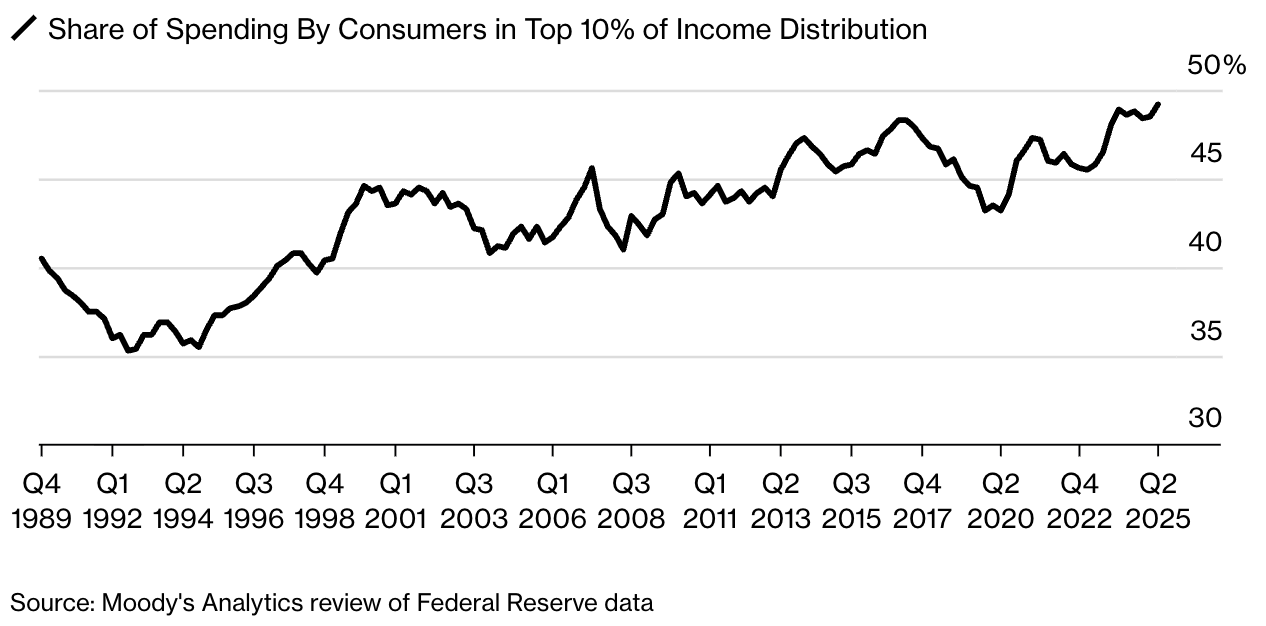
Almost half of all consumer spending is now accounted for by the wealthiest 10 percent of Americans. Nearly two-thirds of total spending is accounted for by the top five percent of households, while the share of the bottom 80 percent has decreased to just 37 percent.
The economy is more fragile than it seems because of this imbalance. Overall spending may rapidly decline if the stock market slows or if wealthy households lose confidence.
The Middle Class Feels the Strain
The strain that low-income households have endured for years is beginning to affect middle-class families. Food, rent, and health insurance prices are still high, wage increases have slowed, and student loan payments have resumed. For a growing number of households, the headline economic statistics simply do not match their lived experience.
Why This Is an Economic Problem
Economists caution that this trend throws the economy out of balance. An economy's strength is determined not just by the rate of growth but also by how broadly that growth is distributed. The foundation grows more unstable as the gap between rich and poor widens. If spending becomes concentrated at the very top, a single shock to asset prices or upper-income confidence could have an outsized effect on the broader economy.
The US economy's growth looks strong on the surface, but it is increasingly driven by the wealthy. A narrow base of consumer spending makes the overall picture more fragile than the headline numbers suggest.