
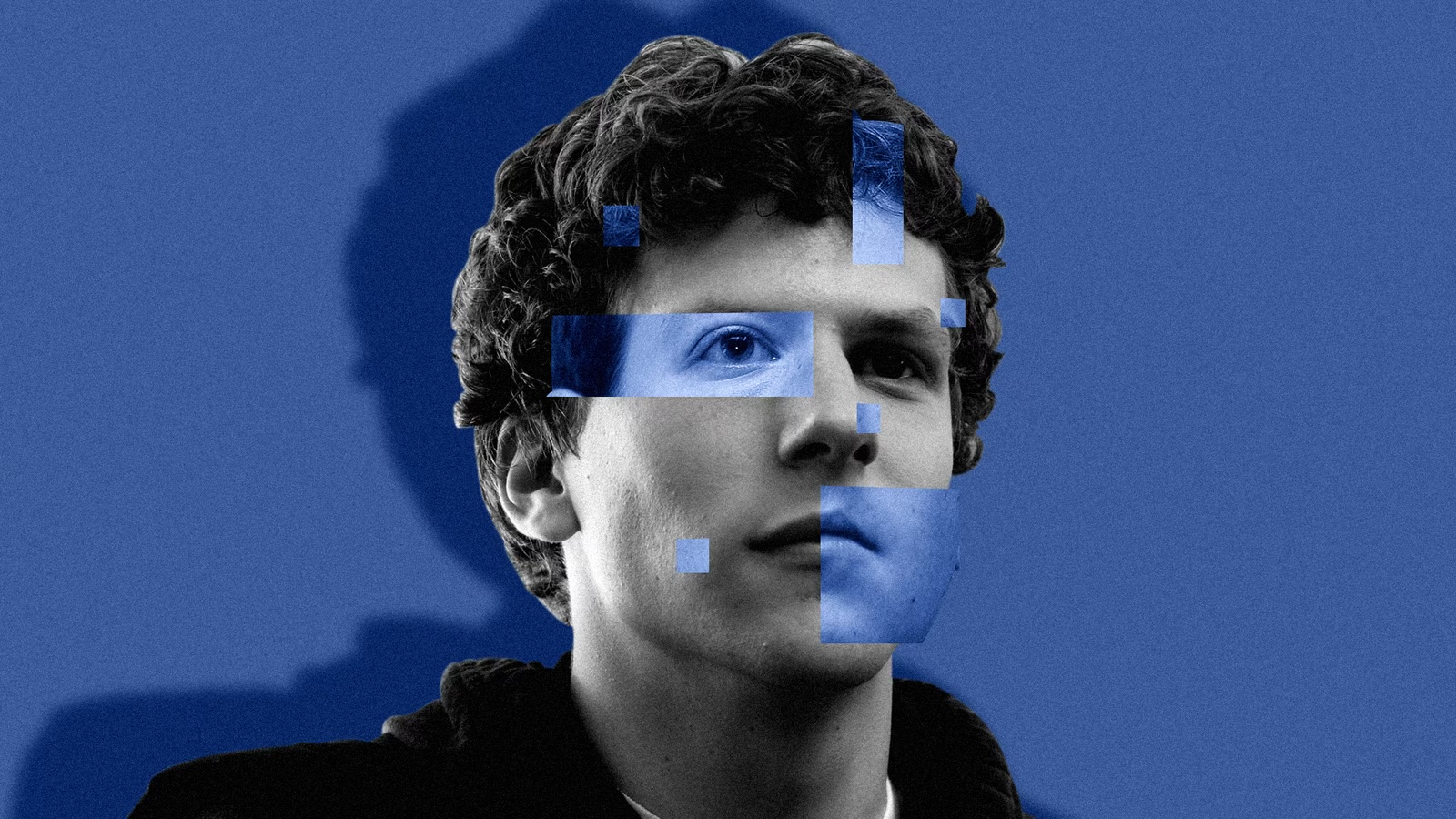
Ask most people under thirty how Facebook was founded, and they will tell you, more or less accurately, the plot of a 2010 film. A lonely, awkward, brilliant Harvard student gets dumped, builds something out of spite and ambition, betrays his best friend, gets sued by twins who claim he stole their idea, and ends the film alone, refreshing a friend request to the girl who rejected him. It is a genuinely great piece of screenwriting. Aaron Sorkin's dialogue crackles the way it always does. David Fincher's direction is precise and cold in exactly the right way. It won three Oscars and reshaped how an entire generation understands the man who built the platform they grew up on.
It is also, by its own writer's admission, not really a documentary.
In numerous interviews, Sorkin has stated that he did not care whether the events he depicted actually happened; he cared about a story about loyalty and betrayal that happened to be set at the founding of Facebook. Zuckerberg himself has disputed several of the film's portrayals, including his motivations and his relationship with Eduardo Saverin. The lawsuits that the film dramatises were real, they were settled. But the internal emotional narrative, the wounded ex-girlfriend as origin story, the particular cruelty attributed to Zuckerberg in early scenes, these are constructions. Powerful ones. Not the depositions.
Here is the argument I actually want to make, and it is not that the film lied. Films are allowed to be fiction. The argument is that this particular fiction became the dominant cultural verdict on a real person and a real company, and almost nobody experiences it as fiction anymore. Ask someone why they distrust Zuckerberg, and there is a real chance the honest answer traces back to a scene written by a screenwriter who has openly said factual accuracy was not the point.
This is important because The Social Network did something extraordinarily powerful for a based-on-a-true-story film. It did not simply dramatise the founding of Facebook. It gave the emotional justification for it, the bruised ego, the yearning to be let into a world that had spurned him, and that justification has hardened into conventional wisdom about Zuckerberg's character that conditions how people interpret every move the company subsequently makes. This is a very specific story, that of a cold, calculating founder who built an empire out of rejection, and it is one a screenwriter chose to tell because it served the film he wanted to make, not because it was independently established as true.
I'm not asking for sympathy for Zuckerberg, whose company has been under plenty of scrutiny itself for its own record over the past decade. What I am saying is that the origin story people tell to explain that record was written by someone whose job was drama, not history, and that the difference between those two things gets erased the moment a film is good enough. A bad biopic is fact-checked in the culture pages and then forgotten. A brilliant one is taken in as memory.
What unsettles me, the more I think about it, is how little resistance this kind of narrative meets. We are generally suspicious of a simple self-serving account of events. There are plenty of reasons why no one would take Zuckerberg's own origin story at face value. But we took a screenwriter's account on trust, because it had better dialogue and a more satisfying shape than the messy, contested, lawsuit-riddled reality on which it was based. This depicts that a well-constructed story beats a poorly constructed truth, and most viewers never notice the substitution taking place.
That is the actual subject of The Social Network, whether Sorkin intended it or not. Not how Facebook was founded. Who gets to decide how the founding is remembered, and how easily a good enough story can replace the far messier thing it claims to represent.